
2026 SPA Workshops & Convention
March 25–March 29, 2026 | Sheraton Centre Toronto Hotel | Toronto, Ontario
Become a sponsor, exhibit, or advertise at our 2026 SPA Convention! Click here for more information.

If you work with or are a student of personality or psychological assessments, the SPA Annual Workshops & Convention is where your peers, mentors, and thought leaders gather to advance the field. This is the only event dedicated entirely to assessment—offering in-depth sessions on tools like the MMPI, Rorschach, PAI, and performance-based methods, along with cutting-edge research, case-focused presentations, and practical applications. Whether you’re a student, clinician, or researcher, you'll walk away with insights you can immediately apply—and a network of people who share your passion for understanding personality in all its complexity.
As we get closer to the Convention, more information will be made available.
| Sponsor Prospectus | Featured Lecturers | Workshops | Deep Dives |
| Hotel | Air Travel | Volunteer | Pricing |
| Access App |
Below you will find a digital PDF version of our program book. You are more than welcome to print this out but keep in mind that some details may change as we continue to finalize details. If you have any questions, please visit our FAQ page or contact us at info@personality.org.
Featured Lecturers
Thursday, March 26
1:50PM–2:50pm
Assessing Personality as it is Lived: Integrating Context and Daily Life Through Technology (Dr. Nicole Cain, Dr. Michael Roche, Dr. Adam Natoli, & Dr. Katie Lewis)
As personality assessment continues to evolve, technological innovations offer new opportunities to expand how we conceptualize, measure, and interpret personality. This panel highlights three complementary approaches that illustrate how technology can deepen assessment by integrating personality structure with context, behavior, and data-driven analytic methods. Together, the panelists will demonstrate how technology can enhance core principles of personality assessment. Dr. Michael Roche will examine how personality dynamics unfold in daily life using an experience sampling methodology, combining person-specific data analysis with sample-wide associations to integrate nomothetic and idiographic insights. He considers how salient contexts, such as discrimination, influences these associations and the meaning behind them for personality assessment. Dr. Katie Lewis will present a clinical case study using a multimethod, experience sampling framework to investigate the daily interpersonal behaviors and experiences of a patient over the course of 1-year in residential treatment. She will illustrate how these findings expand our understanding of personality dynamics and provide support for integrating experience sampling methods into routine clinical assessment and practice. Finally, Dr. Adam Natoli will present research using machine learning and artificial intelligence to examine complex patterns in personality assessment research and practice, addressing both the promise of these methods for advancing measurement and the interpretive challenges they introduce. Across presentations, panelists will address how technology can expand ecological validity, clinical nuance, and analytic capacity in personality assessment, consequentially improving its utility and accessibility. Moderated by SPA President Dr. Nicole Cain, this session will emphasize responsible, theory-driven integration of technology and encourage attendees to consider how these approaches may be thoughtfully incorporated into their own research and clinical practice.
Learning Objectives: After attending this session, participants will be able to:
- Describe how ecological momentary assessment (EMA) can be used to assess external life events and contextual factors in conjunction with personality assessment.
- Explain how integrating EMA with personality assessment methods can enhance clinical case conceptualization and assessment feedback.
- Identify potential applications and limitations of machine learning and artificial intelligence approaches in the analysis and interpretation of personality assessment data.
Thursday, March 26
5:30PM–6:30PM
Bruno Klopfer Award Lecture: Searching for Methods in the Madness (Dr. John Kurtz)
John Kurtz will reflect on his educational and professional development as a psychologist, with frequent attention to the influence and encouragement of his journey from previous Klopfer Award winners. The theme of his research program has been the value of using multiple methods for personality assessment, and this theme will be illustrated with examples from various stages of his career. The many advantages of using knowledgeable informants has been a longstanding and frequent interest, and this method was used to investigate the stability of trait expression across different social contexts. Kurtz has also been interested in the use of sentence completion techniques to measure Loevinger’s theory of ego development, and he will recount a study that examined the place of this construct in the five-factor trait taxonomy. His research with the Personality Assessment Inventory has evaluated techniques for discriminating ordinary defensiveness provoked by the selection context versus conscious attempts to conceal psychopathology. Currently, Kurtz and his students are reporting the results of a narrative assessment project. Stories of COVID-19 lockdown were collected from a large sample of young adults and rated for growth motivations, identity and coherence of self, and emotional investment in relationships. These narrative variables were found to be significant predictors of current self-reported well-being. Kurtz will conclude by expressing appreciation to the Society of Personality Assessment for its enduring openness to the many possible means for understanding the complex nature of human beings.
Learning Objectives
At the end of this workshop, the learner will be able to:
- List three unique advantages to the use of knowledgeable informants in personality assessment.
- Describe the assessment method used to measure Loevinger’s ego development construct.
- Identify the distinction between the unconscious-defensive and conscious-deceptive varieties of positive response distortion.
Friday, March 27
5:15PM–6:15PM
Reflections on the Measurement and Nomological Network of Wisdom (Dr. Marc Fournier)
Wisdom is an ancient concept that has captured modern scientists’ attention and interest. Defined as morally grounded excellence in social-cognitive processing, wisdom entails the application of our meta-cognitive capacities to solve complex and ill-defined life problems. The development of a cumulative and coherent science of wisdom has been complicated by the issue of how to measure it: some researchers prefer performance measures to assess people’s wisdom-related expertise in living; other researchers prefer self-report measures to assess people’s wisdom-related attributes. Each tradition has its strengths and limitations. In this address, I will present meta-analytic and empirical research to clarify wisdom’s nomological network through the common and unique correlates that wisdom manifests across these measurement traditions. As wisdom and narcissism are defined antithetically, I will then examine whether the absence of narcissism constitutes a necessary condition for wisdom. I will close by reflecting on the role of gen AI in future wisdom research.
This talk is intended for those generally interested in the perplexing lack of convergence between self-report and performance measures, as well as for those specifically interested in the measurement of elusive psychological constructs such as wisdom.
Learning Objectives
By the end of this talk, attendees should:
- Know how wisdom is conceptualized within the common wisdom model
- Recognize commonly used self-report and performance wisdom measures
- Understand the strengths and the limitations of common wisdom measures
- Understand the correlates and necessary conditions of wisdom in self-report
- Understand the correlates and necessary conditions of wisdom in performance
- Understand the theoretical and empirical links between narcissism and wisdom
Saturday, March 28
11:00AM–12:00PM
From Self-Erasing to Standing True – Same Trait, Different Function (Åse-Line Baltzersen)
This keynote offers a lived experience perspective on the dimensional understanding of personality disorder, charting the shift from the onset of personality difficulties through disorder and into robust recovery.
Drawing on the ICD-11 and the Alternative Model for Personality Disorders (AMPD), Baltzersen examines how self and interpersonal impairments not only signal severity but also shape how traits are expressed. The level of functioning can dictate whether an inherent trait becomes protective, neutral, destructive, or pathological.
Through personal narrative, medical records, and reflections spanning from adolescence to recovery, the audience gains insight into this dynamic reorganization. What once appeared as impulsive self-destructiveness – described as “keeps finding herself in absurd and dangerous situations” – has, through functional recovery, transformed into spontaneous curiosity that now lads towards valuable and enriching environments.
This is a story that illustrates the core thesis of structural change: same trait, different function.
Learning Objectives
- Participants will gain insight into how personal narratives can illustrate theoretical models such as the ICD-11 and DSM-5 Alternative Model for Personality Disorders, deepening empathy and understanding in assessment and treatment contexts.
- Participants will learn how the same core traits can serve both protective and self-destructive functions depending on underlying personality organization.
Workshops
Wednesday
Morning Half-Day Workshops | 8:15 am–12:00 pm | 3.5 CEs Each
(A1) | Applying the Personality Inventory for DSM-5 (PID-5) and the DSM-5 Alternative Model of Personality Disorders (AMPD) in Clinical Settings–(Dr. Bob Krueger, Dr. Tanya Freedland, & Dr. Kelsey Hobbs-Matteson) CANCELED
(A2) | Assessing for Personality Pathology, Bias, and Extremism in Police & Public Safety Applicants–(Dr. Casey Stewart) - In-person and Virtual CANCELED
(A3) | Bloodspots and Inkblots: Using Rorschach's Test in Forensic Murder Case Assessments-Theory, Concepts, Classifications, & Case Presentations–(Dr. Reneau Kennedy & Dr. Nancy Kaser-Boyd) - In-person and Virtual
(A4) | Integrating and Combining Different Test Results to Distinguish Authentic/Credible From Feigned/Noncredible Clinical & Forensic Presentations–(Dr. Luciano Giromini & Dr. Laszlo Erdodi)
Full-Day Workshops | 8:15 am–4:45 pm | 7 CEs Each
(A5) | An Introduction to Therapeutic Assessment with Adolescents–(Dr. Raja David & Dr. Pamela Schaber) CANCELED
(A6) | Multi-Method Assessment of Suicide Risk & Clinical Case Review–(Dr. Ali Khadivi & Dr. James Kleiger)
In addition to examining the evidence-based literature on suicide risk assessment, the workshop focuses on utilizing and integrating clinical interviews with MMPI-3, PAI-PLUS, and the Rorschach (R-PAS and CS) in suicide risk evaluation.
This workshop employs a lecture format with slides, case examples, and audience participation to examine suicide risk factors in different settings and contexts and to illustrate how to conduct a suicide preventive evaluation. Our discussion highlights:
- Diversity related to suicide risk,
- the significance of suicide risk formulation,
- the limitation of suicidal ideation as a risk factor,
- effective use of self-report and performance-based measures in suicide risk assessment
- psychosis and suicide risk,
- countertransference in assessing suicide risk, and
- the use of suicide contracts.
Additionally, we discuss the strengths and limitations of psychological testing instruments and other specialized tools in assessing suicide risk.
Goals and Objectives:
- Participants will be able to discuss two limitations of suicidal ideation as a risk factor.
- Participants will be able to list two strengths of multi-scale personality measures in the assessment of suicide risk.
- Participants will be able to explain two conditions under which a suicide protective factor could become a risk factor.
- Participants will be able to make two key distinctions between Risk Status and Risk State.
- Participants will be able to describe three conceptual approaches to the use of the Rorschach in suicide risk assessment.
(A7) | The Bot Joins Here: Implementing AI-Assisted Narrative Assessment in Psychological Research and Practice–(Dr. Caleb Siefert & Dr. Barry Dauphin)
Afternoon Half-Day Workshops | 1:00 pm–4:45 pm | 3.5 CEs Each
(A8) | Applying the MMPI-3 in Presurgical Psychological Evaluations–(Dr. Ryan Marek) CANCELED
(A9) | Beyond the Wall of Reason: A Journey Through Attachment, Emotion, and Healing with the Early Memories Procedure–(Dr. Serena Messina, Dr. Filippo Aschieri, & Dr. Diane Santas) - In-person and Virtual
This advanced-level workshop will explore deactivating defenses from an attachment theory perspective, with a focus on how these defenses emerge, function adaptively, and—at times—become maladaptive. The presenters will reflect on clients’ “dilemma of change”, and the forces that make it difficult for clients to embrace a change. Drawing from the conceptual framework of the Adult Attachment Projective Picture System (AAP; George & West, 2012), we will review common deactivating strategies such as intellectualization, normalization, rationalization, compartmentalization, minimization, overemphasis on independence or achievement, and emotional numbing.
The workshop will then demonstrate how the Early Memories Procedure (EMP; Bruhn, 1992) can be used as a clinically powerful tool to explore and soften these defenses both in the context of a psychological assessment as well as therapy. The EMP is a brief, narrative-based assessment method that offers deep insight into clients’ world view, including attachment defense, unspoken conflicts, and adaptations. Through real clinical cases, participants will learn to identify subtle markers of defenses, generate attachment-informed hypotheses, and use clients’ early memories to create therapeutic bridges that invite emotion and help make meaning of current struggles. Furthermore, attendees will be able to reflect on their own deactivation defenses and on the countertransference that they experience when they work with clients who employ strong deactivation defenses.
Importantly, this workshop will not only present theory and case material—it will immerse attendees in experiential learning through video segments, structured role-play, and small group discussion. Participants will have the opportunity to practice identifying deactivating defenses in the Early Memories Procedure, reflect on case conceptualization and clinical interventions, as well as their own countertransference.
This workshop is considered advanced due to its focus on the integration of narratives as they emerge in the Early Memories Procedure and the attachment frameworks, and its emphasis on experiential methods that foster skill development and self-reflection in clinicians.
(A10) | Contemporary Integrative Interpersonal Assessment and Case Formulation–(Dr. Christopher Hopwood) - In-person and Virtual
(A11) | Neuropsychological Rorschach Assessment: Empirical Research and Clinical Applications–(Dr. Emiliano Muzio, Dr. Luciano Giromini, & Dr. Philip Keddy)
(A12) | Teaching & Supervising Psychological Assessment: Using a Social Justice Approach–(Dr. Hadas Pade & Dr. Alea Holman) CANCELED
(A13) | Turning Numbers into Narratives: Crafting Effective Psychological Reports and Delivering Impactful Feedback Part 1–(Dr. Connor Adams & Dr. Madeleine Starin) CANCELED
Thursday
Morning Half-Day Workshops | 8:00 am–11:45 am | 3.5 CEs Each
(B1) | Enhancing Psychoeducational Evaluations: Incorporating Personality Instruments for Deeper Insight into Student Needs–(Dr. Tayla Lee & Dr. Janay Sander) CANCELED
(B2) | Integrating the Social Cognition and Object Relations Scale-Global Rating Method (SCORS-G) into the Psychological Assessment Process: Scoring and Interpretative Strategies–(Dr. Michelle Stein & Dr. Jenelle Slavin-Mulford) - In-person and Virtual
(B3) | Using Performance-Based Tests to Help Clients Heal Unsolved Trauma–(Dr. Stephen Finn)
Participants will be able to:
- Summarize current neurobiological research on the power of performance-based tests to elicit unresolved trauma
- List ways to keep clients within the window of tolerance while using projective tests therapeutically
- Explain at least two techniques for using material from performance-based tests therapeutically
- Practice using performance-based tests therapeutically during role plays
(B4) | Turning Numbers into Narratives: Crafting Effective Psychological Reports and Delivering Impactful Feedback Part 2–(Dr. Connor Adams & Dr. Madeleine Starin) CANCELED
Sunday
Morning Half-Day Workshop | 8:30 am–12:15 am | 3.5 CEs
(D1) | The MACI-II: Assessment to Intervention with Adolescents from the Millon Perspective–(Dr. Robert Tringone) - In-person and Virtual
Full-Day Workshop | 8:30 am–5:00 pm | 7 CEs
(D2) | Further Understanding the Bipolar Spectrum: Assessing Manic-Depressive Personalities Using a Psychodynamic Analysis of Speech–(Dr. Odile Husain & Dr. Yanick Pellerin)
The faculty will explore the concept of manic-depressive personality (MDP) through a psychodynamic lens, offering a qualitative approach to personality assessment using the Rorschach and the TAT. Moving beyond traditional psychometric tools, the session introduces participants to a theoretical and clinical framework that emphasizes affective experience, object relations, and language. Drawing on the Lausanne School’s methodology and key contributions from Akiskal, Bleuler, and others, the workshop provides tools for identifying MDP traits in clinical material, particularly through speech analysis. Participants will engage with case studies and practice thematic analysis to refine their diagnostic sensitivity.
Deep Dives
Thursday, March 26 | 9:00 am–11:45 am
Deep Dive registration is included in full convention registration.
(C1) | Reimagining Personality Assessment Training: Teaching Ethical and Effective AI Use–(Dr. Ksera Dyette & Dr. Douglas Roberts)
The morning session will provide a didactic foundation in key concepts, including the capabilities and limitations of large language models (LLMs), embedded tools, and ambient listening technologies. Participants will reflect on their own AI use and comfort level through guided activities and engage in critical discussion about ethical challenges, cultural bias in AI-generated content, and supervision practices for trainees using AI.
The afternoon session will hands-on practice integrating a variety of AI tools into each step of the assessment process using a comprehensive fictional case (amalgamated from multiple patients). Participants will work step-by-step through the psychological assessment process—reviewing records, formulating referral questions, selecting measures, interpreting test results, integrating findings, and generating recommendations and feedback—while using a variety of AI tools in structured and supervised ways.
(C2) | Teaching and Practicing Advanced Integrative Assessment, Conceptualization, and Treatment Planning–(Dr. Radhika Krishnamurthy & Dr. Steven Smith)
- Identify central personality characteristics, assessed through widely used personality measures, that aid or prevent effective adaptation.
- Integrate personality assessment results with case history to develop a diagnostic formulation and case conceptualization.
- Formulate specific treatment targets.
- Identify connecting links between the preceding processes that provide for an integrated, cohesive approach.
- Describe approaches to teach and/or supervise students to deepen conceptualization and treatment planning.
(C3) | LEAF (Lived Experience and Families) on the Process of Assessment–(Dr. Sharon Nelson & Panelist)
Hotel Information
123 Queen Street West Toronto, ON M5H 3M9 Canada
$289 CAD + Taxes & Fees/Night
Deadline to Reserve Your Room is March 16, 2026!
 |
 |
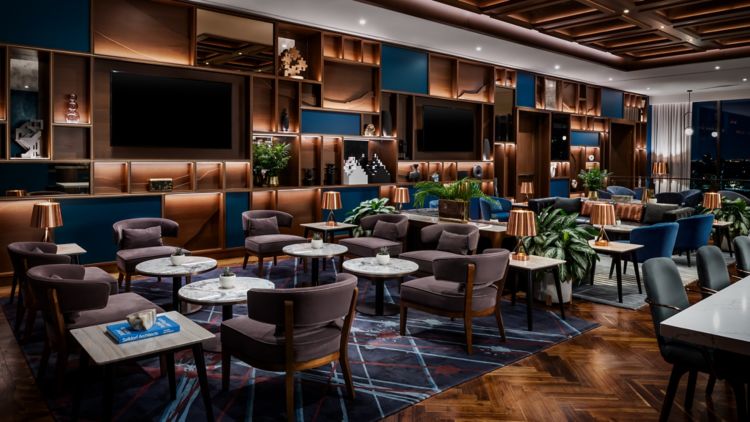 |
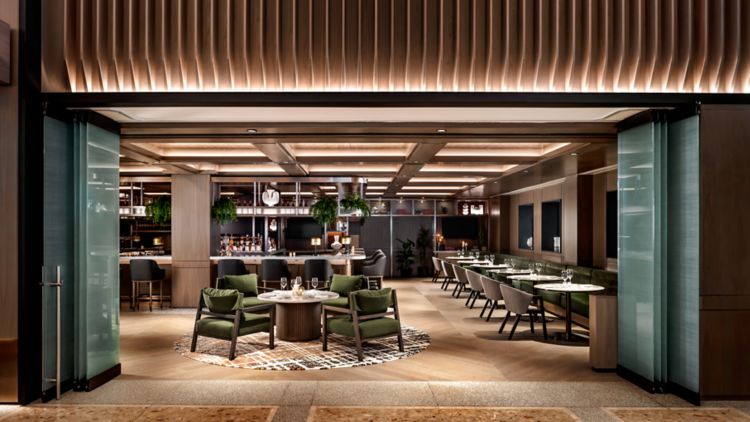
Embrace the energy of Toronto during your stay at Sheraton Centre Toronto Hotel, located in the financial district, steps from the entertainment district and all major attractions. The recent transformation of our downtown Toronto hotel brings a new arrival experience, a lobby with open and collaborative workspaces and world-class culinary experiences. Enjoy the unbeatable comfort of our pet-friendly rooms and suites, work out in our 24-hour fitness centre or enjoy a refreshing swim year-round in our heated indoor-outdoor pool. Upgrade to a room providing access to our stunning 43rd-floor Sheraton Club Lounge with sweeping views of downtown Toronto, complimentary breakfast, evening appetizers, and free Wi-Fi. Collaborate and connect in style at Canada’s largest conference hotel in downtown Toronto, Ontario, featuring 130,000 sq. ft. of meeting space including our 2.5-acre outdoor waterfall garden. Sheraton Centre Toronto Hotel is dedicated to exceeding your expectations.
Click here to access a Toronto travel guide for restaurants, things to do, and more.
Air Travel
Air Canada has been chosen as the preferred airline for our event. They have provided a 10% promotional code to use at booking. To book a flight with the code, access aircanada.com and enter the code in the Promotion Code Box.
Promotion Code: VMNDUV31
Pricing
In-Person Tickets
| Member Type |
Early Registration Rate* (Now–1/14/26) |
Regular Registration Rate* (1/15/26–3/9/26) |
Late Registration Rate* (3/10/26–3/29/26) |
| Student | $109 | $134 | $174 |
| Early-Career | $239 | $279 | $329 |
| Member/Fellow/Associate | $399 | $449 | $519 |
| Non-Member Student | $164 | $189 | $229 |
| Non-Member Early-Career | $319 | $359 | $409 |
| Non-Member | $539 | $589 | $659 |
Virtual Tickets
| Member Type |
Regular Registration Rate* (Now - 3/9/26) |
Late Registration Rate* (3/10/26 - 3/29/26) |
| Student | $134 | $174 |
| Early-Career | $279 | $329 |
| Member/Fellow/Associate | $449 | $519 |
| Non-Member Student | $184 | $229 |
| Non-Member Early-Career | $359 | $409 |
| Non-Member | $589 | $659 |
Half-Day Workshop Tickets
| Member Type |
Early Registration Rate* (Now–1/14/26) |
Regular Registration Rate* (1/15/26–3/9/26) |
Late Registration Rate* (3/10/26–3/29/26) |
| Student | $89 | $114 | $154 |
| Early-Career | $159 | $199 | $249 |
| Member/Fellow/Associate | $199 | $249 | $319 |
| Non-Member Student | $119 | $144 | $184 |
| Non-Member Early-Career | $219 | $259 | $309 |
| Non-Member | $329 | $379 | $449 |
Full-Day Workshop Tickets
| Member Type |
Early Registration Rate* (Now–1/14/26) |
Regular Registration Rate* (1/15/26–3/9/26) |
Late Registration Rate* (3/10/26–3/29/26) |
| Student | $149 | $174 | $214 |
| Early-Career | $259 | $299 | $349 |
| Member/Fellow/Associate | $329 | $379 | $449 |
| Non-Member Student | $179 | $204 | $244 |
| Non-Member Early-Career | $319 | $359 | $409 |
| Non-Member | $449 | $499 | $569 |
*Member pricing is based on individual membership status at the time of the event. At this time, the SPA Annual Convention does not provide the option to join/renew and register in the same transaction. However, you will be given the option to join/renew prior to starting registration when you click the registration link. If you have never been a member and would like to register for the SPA Annual Convention at the member rate, please create a profile and join prior to registering.
Cancellation Policy: Cancellations will be accepted for the Annual Convention and/or workshop, less a $75 administrative fee, until March 9, 2026. After this date NO REFUNDS will be granted.
Elevation & Evaluation: Circles of Connections at CN Tower
Wednesday, March 25, 2026, 6-9pm.
Join your fellow convention attendees for light food, drink, and fellowship at the CN Tower, one of the Seven Wonders of the Modern World in Civil Engineering. Registration includes access to the CN Tower, including the exclusive SPA reception. Transportation to CN Tower will not be provided.
 The Society for Personality Assessment (SPA) is approved by the American Psychological Association to sponsor continuing education for psychologists. SPA maintains responsibility for this program and its content.
Society for Personality Assessment is recognized by the New York State Education Department's State Board for Psychology as an approved provider of continuing education for licensed psychologists #PSY-0218.
“The Society for Personality Assessment is approved by the Canadian Psychological Association to offer continuing education for psychologists. The Society for Personality Assessment maintains responsibility for the program.”